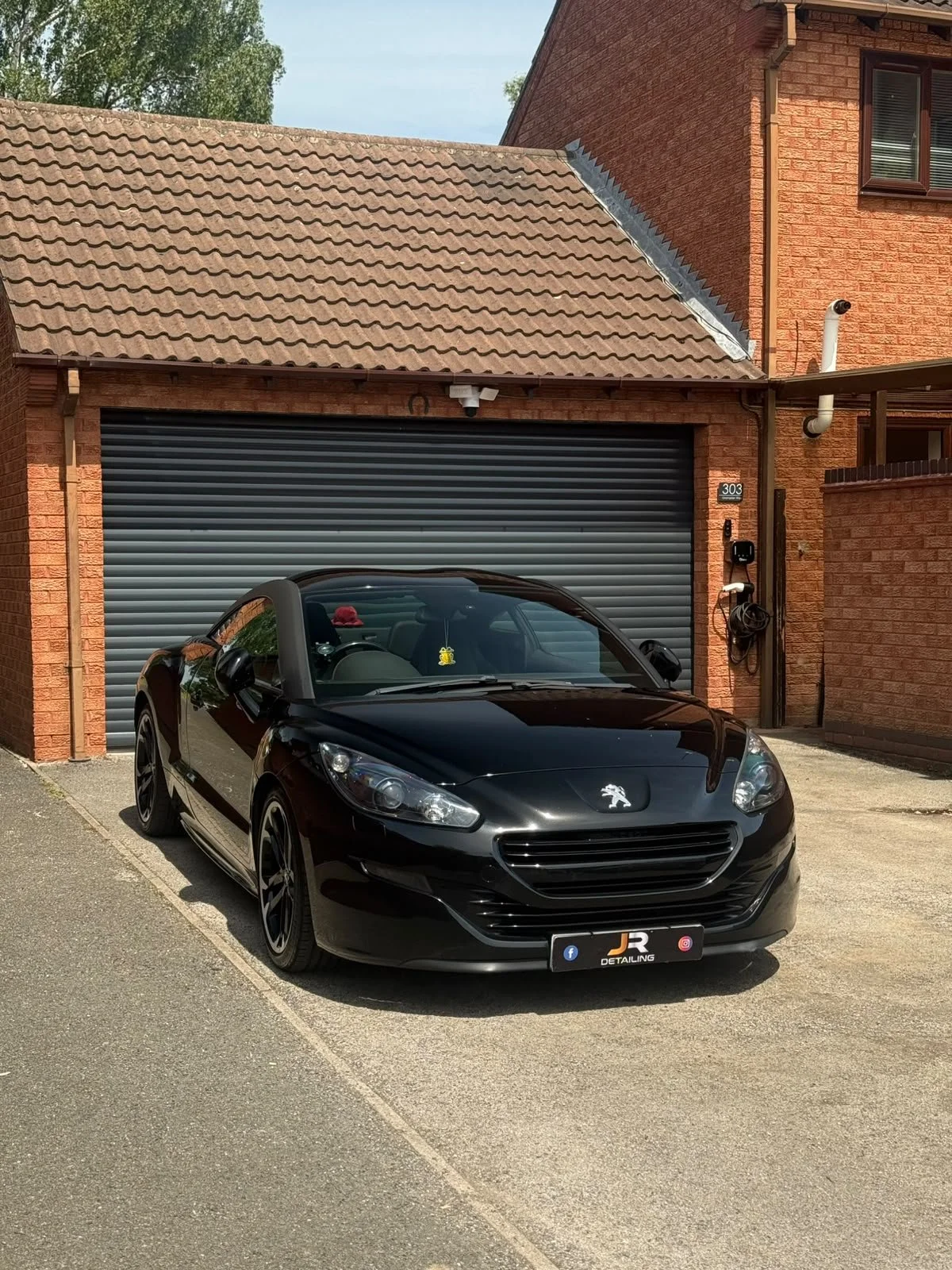
Where to Get Your Car Detailed in Derby: What to Actually Look For
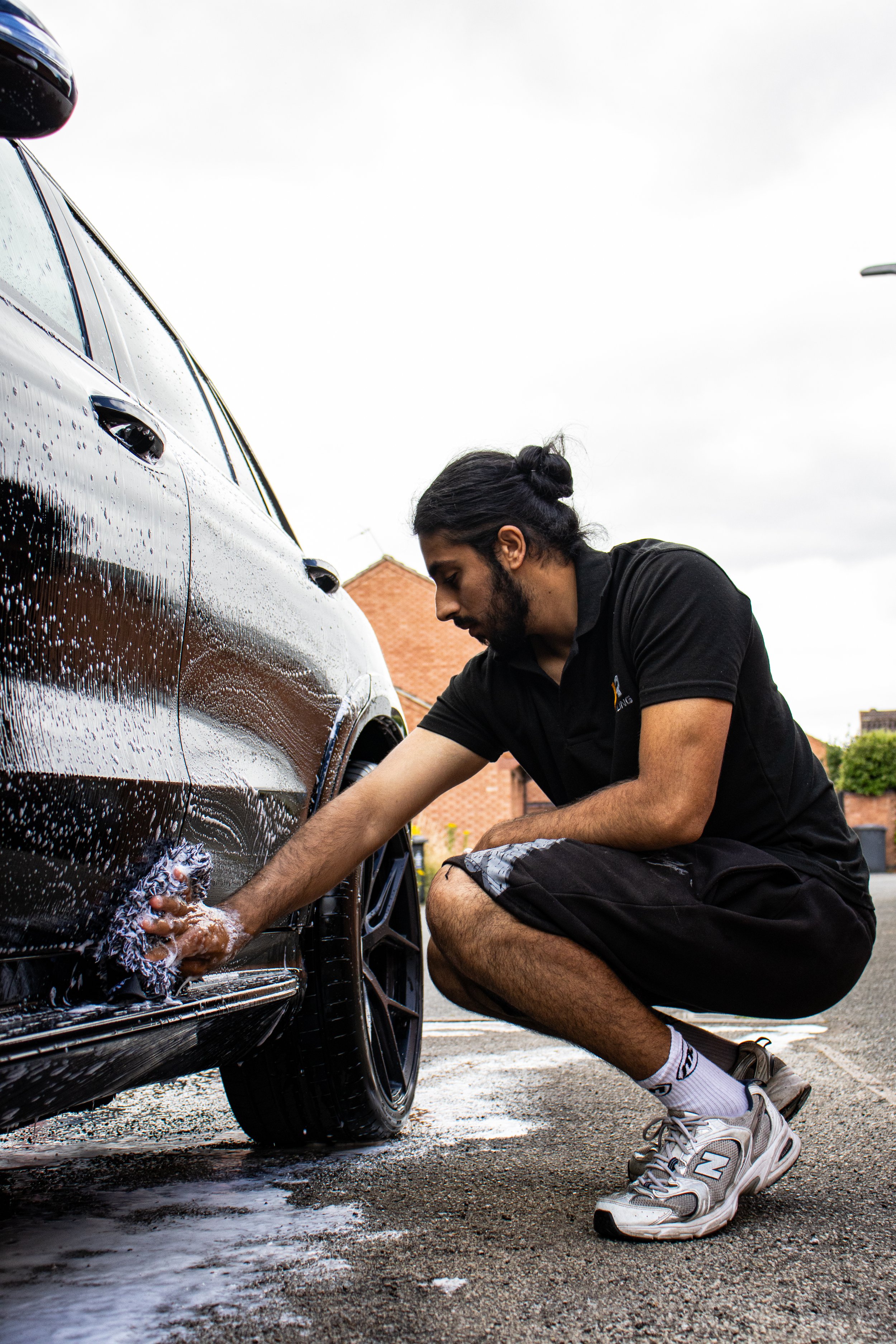
"Detailer" isn't a protected title. There's no qualification you need, no register you have to join, and no minimum standard anyone checks. Someone who bought a machine polisher last month can put up a website and start taking bookings, and plenty do.
That's awkward to write as a detailer, because it applies to me as much as anyone. So rather than telling you to pick me, here's something more useful: the questions that actually reveal whether someone knows what they're doing, and what good answers sound like.
Derby has several genuinely good operators. It also has people charging correction prices for a glaze polish. These questions separate them.
Where will the work actually happen?
This is the first thing to establish, because it determines what's realistically possible.
Paint correction and ceramic coating need controlled conditions. You need consistent lighting to see defects, shelter so dust and rain aren't landing on the panel, stable temperature for coatings to cure properly, and enough space to work all the way round a car with a polisher.
A driveway gives you none of that. You cannot reliably spot swirl marks in changeable daylight, and a ceramic coating that gets rained on during its cure window is compromised.
Valeting and enhancement work is different. Interior deep cleans, maintenance washes and light enhancement details are perfectly good mobile jobs. Plenty of excellent detailers work mobile for exactly this kind of work.
So the honest position is: mobile is fine for some things and not others. If someone offers to apply a multi-year ceramic coating on your driveway in November, that's worth questioning.
How many hours will my car be with you?
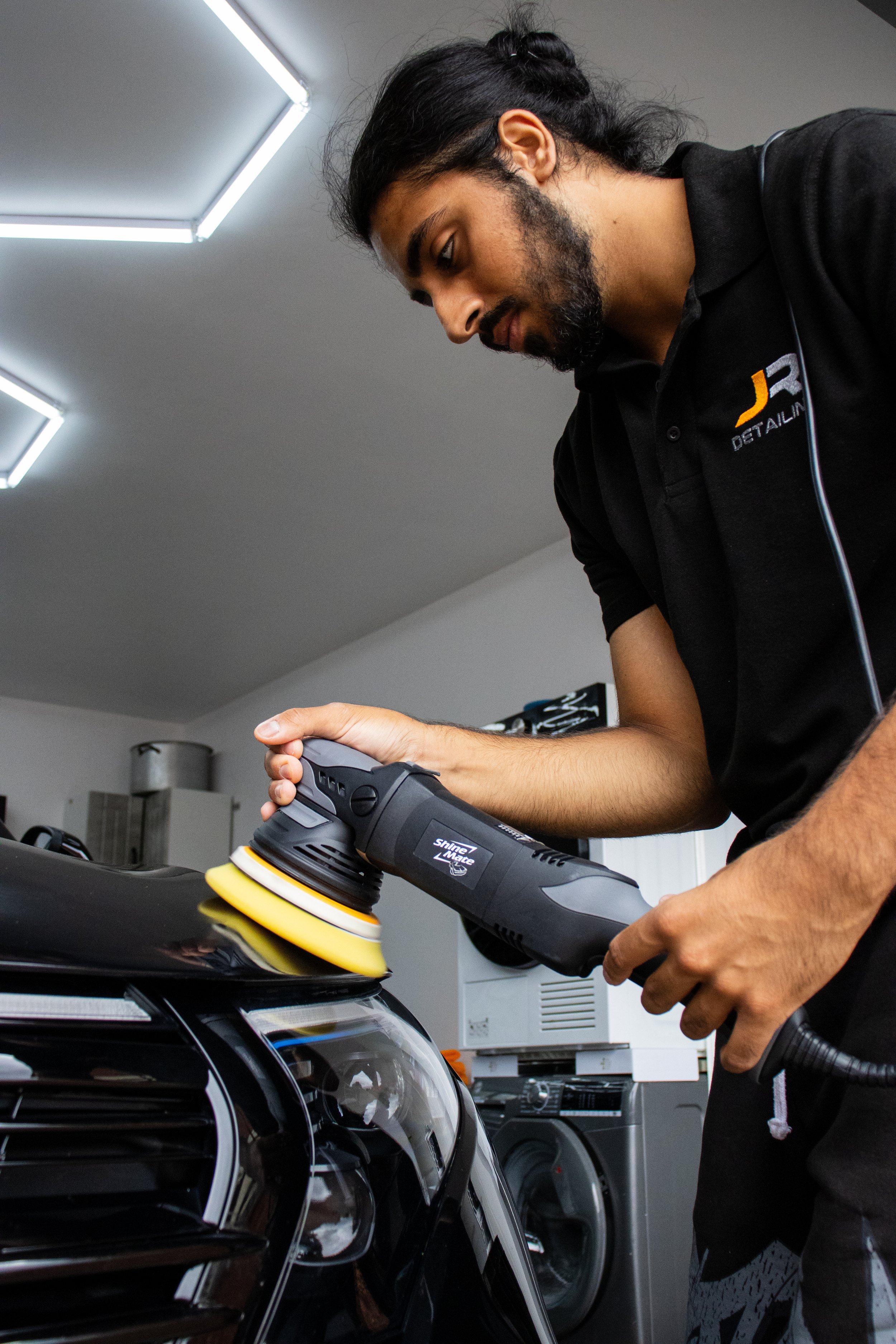
This single question tells you more than any other, because detailing is priced in labour and you can't fake time.
Rough guides for a normal-sized car:
Full decontamination and enhancement polish: a full day.
Two-stage correction: one to two days.
Correction plus ceramic coating: two days minimum, sometimes three.
If someone quotes you "paint correction" and says the car will be ready in three hours, they are not machine polishing it. Three hours is roughly enough time to wash, dry, and run a glaze over it — which will look good until it rains a few times and the fillers wash out.
The time answer and the price answer have to make sense together. Work out roughly what the hourly rate implies. If it's below what a decent mechanic charges, something is being skipped.
What's your preparation process?
Preparation is most of the job. A good answer covers, in order: a pre-rinse and snow foam, a contact wash using two buckets, chemical decontamination with iron fallout remover and tar remover, a clay bar treatment, and a panel wipe with an IPA solution before any coating goes on.
If someone jumps straight from "wash" to "polish", they're skipping the decontamination. That matters because polishing over embedded iron and grit drags it across your paint — you'd be adding scratches while trying to remove them.
And if a coating is going on, ask specifically about the panel wipe. Coatings need to bond to bare clear coat. Any polishing oil left on the surface stops that happening properly, and the coating fails early. It's one of the most common reasons a "five-year coating" is gone in eight months.
Do you measure paint depth before correcting?
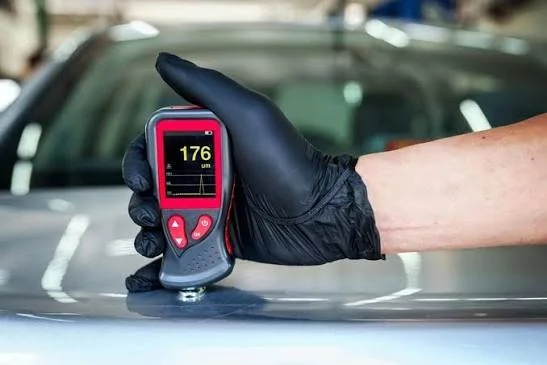
Correction works by removing a few microns of clear coat. There's a finite amount available, and once it's gone it doesn't come back.
A paint thickness gauge tells the detailer how much they're working with before they start. It also flags panels that have been resprayed or previously polished heavily, which need a much more careful approach.
Not every job requires readings on every panel. But a detailer who owns a gauge and uses it on correction work is demonstrably taking the risk seriously. One who has never used one is guessing — and on a car that's been machine polished twice before, guessing is how you end up burning through clear coat on an edge.
Ask the question. The answer is revealing either way.
What products do you use, and why those?
You're not looking for a particular brand name. You're looking for whether they can explain a choice.
Professional coatings are generally installer-only — sold to trade rather than off the shelf — and require the preparation described above to perform as intended. Brands like Gtechniq, CarPro, Koch Chemie and Bilt Hamber come up regularly in UK detailing for good reason.
What matters more than the label is whether the person can tell you why they use it, what durability it realistically gives, and what aftercare it needs. Someone who says "it's the best on the market" and can't go further is repeating marketing. Someone who says "I use this because it's more forgiving to level in cooler conditions and it suits the way I work" has actually thought about it.
Can I see your work — and specifically, the difficult bits?
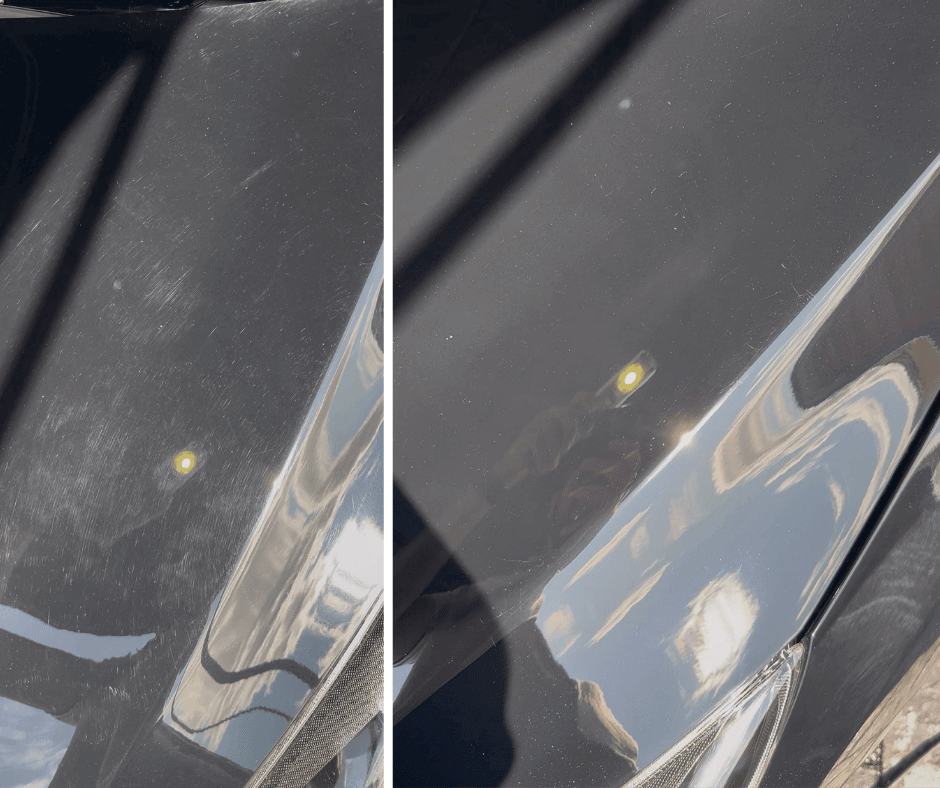
Everyone's gallery looks good. A clean car in flattering light is easy.
What you want to see is before and after shots taken under inspection lighting — a bright torch or LED bar held at an angle to the panel. That's the only way swirl marks show up in a photograph. If a detailer's before shots don't show any defects, they're not demonstrating anything; they're showing you a dirty car and then a clean one.
Also worth looking for: dark-coloured cars, which are far harder to finish well. Anyone can make silver look acceptable. Black is where technique shows.
And reviews, obviously. Look for detail in them rather than volume — reviews that describe the specific work done tell you more than a wall of five-star ratings with no text.
What happens afterwards?
A coating isn't the end of the job. It changes how the car needs to be maintained, and a professional should tell you that unprompted.
You want to hear about the curing window — typically avoiding washing for around seven days and keeping the car dry for the first day or two where possible. You want clear guidance on washing method and what products to avoid. Ideally you want it in writing rather than a verbal briefing you'll have forgotten by next month.
If aftercare isn't mentioned at all, that's a flag. It usually means the durability claim isn't being taken very seriously by the person making it.
Warning signs worth taking seriously
Paint correction offered for under £150. The labour maths doesn't work. What's being sold is almost always a filler glaze.
"Ceramic coating" for £80. That's a consumer spray sealant. It'll bead nicely for a couple of months. It is not the same product category as a professional coating and shouldn't be priced or described as if it is.
No mention of decontamination. The most commonly skipped step, and the one everything else depends on.
Vague on timings. If they can't tell you how long your car will be with them, they haven't planned the job.
Pressure to book immediately. Good detailers are usually booked a couple of weeks out. Someone who can fit you in tomorrow and is pushing hard for a deposit is worth a second look.
Rotary polishers used carelessly. Rotaries are legitimate tools in skilled hands and produce excellent results. But they're also how holograms and burnt edges happen when technique is lacking. If someone mentions rotary work, ask how they finish — a good answer involves refining afterwards.
Questions that are fine to ask, and shouldn't offend anyone
None of the above is rude. Any professional will happily answer all of it, because these are the questions that let them explain why they cost more than the hand wash at the retail park.
If someone gets defensive about being asked how long a job takes or what products they use, that tells you something on its own.
The simplest version of all of this: ask them to walk you through what they'll actually do to your car, step by step. Someone who does this properly will happily talk for five minutes. Someone who doesn't will get vague quickly.
Where I fit in
For transparency, here's how I'd answer my own questions.
I work from a dedicated unit in Derby for correction and coating work, with proper inspection lighting and controlled conditions. I also offer a mobile service across Derbyshire for valeting, interior work and maintenance details — the jobs where mobile genuinely makes sense.
Correction work gets paint depth readings before I start. Every job includes full chemical decontamination and clay bar treatment before anything abrasive touches the paint. Coatings are installer-only products, applied after an IPA panel wipe, with written aftercare provided.
You deal with me from the quote through to handover. Not a call centre, not a subcontractor.
And if your car doesn't need what you've asked for, I'll say so. Plenty of cars that come to me for a two-stage correction genuinely only need an enhancement polish, and that costs considerably less.
Get an honest assessment
Send me a few photos of your paintwork in daylight — ideally with a torch held at an angle across a panel so any swirls show up — and I'll tell you what it actually needs.
If that's a full paint correction and ceramic coating, I'll explain why. If it's decontamination and a single-stage polish, I'll tell you that instead.